Key Takeaways: Best Montessori Toys for Toddlers
- Focus on Real Materials: Montessori toys prioritize natural materials like wood, cotton, and metal for sensory exploration.
- Simple and Purposeful Design: Toys are designed with a specific learning objective in mind, encouraging focus and problem-solving.
- Promote Independence: Montessori toys encourage self-directed learning and exploration at the toddler’s own pace.
- Age-Appropriate Challenges: Select toys that offer just the right amount of challenge to foster growth without frustration.
- Encourage Sensory Exploration: Look for toys that stimulate the senses through touch, sight, and sound.
The Montessori Approach for Toddlers

The Montessori method is a child-centered educational approach that values independence, freedom within limits, and respect for a child’s natural psychological, physical, and social development. For toddlers (roughly ages 1-3), this translates into creating a stimulating environment with carefully chosen toys that encourage exploration, learning, and self-discovery.
Unlike many modern toys that are flashy and overstimulating, Montessori toys are typically simple in design, made from natural materials, and focused on a specific learning objective. This allows toddlers to concentrate, develop fine motor skills, and learn at their own pace.
Essential Montessori Toy Categories for Toddlers
Here are some key categories of Montessori-inspired toys that are beneficial for toddlers:
1. Practical Life Activities
These toys mimic everyday activities and help toddlers develop independence and self-care skills. Examples include:
- Pouring Sets: Small pitchers and cups for practicing pouring water or beans.
- Dressing Frames: Frames with buttons, zippers, snaps, and buckles to practice dressing skills.
- Cleaning Sets: Child-sized brooms, dustpans, and cloths for helping with household chores.
2. Fine Motor Skill Development
These toys help toddlers refine their hand-eye coordination and dexterity through engaging activities. Examples include:
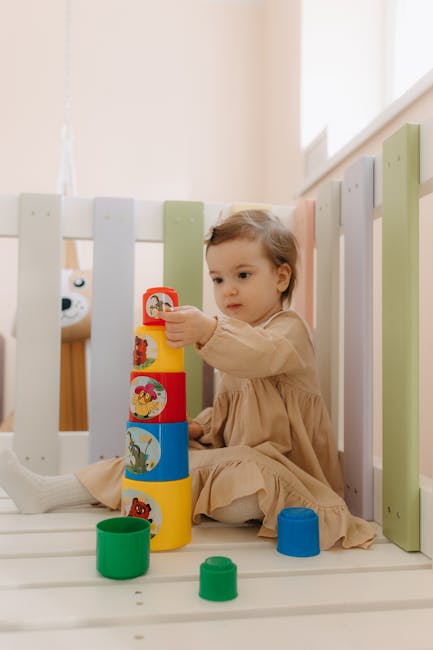
- Stacking Toys: Stacking rings, blocks, or other objects of varying sizes.
- Peg Boards: Wooden boards with colorful pegs for inserting and removing.
- Shape Sorters: Simple shape sorters with basic geometric shapes.
ALT TEXT 2: A young child concentrates while using a wooden shape sorter.
3. Sensory Exploration
Toddlers learn through their senses, so toys that stimulate touch, sight, and hearing are essential. Examples include:
- Wooden Musical Instruments: Xylophones, drums, and shakers made from wood.
- Texture Boards: Boards with different textures like sandpaper, fabric, and wood.
- Object Permanence Box: A box with a hole where a ball can be dropped, teaching object permanence.
4. Language Development
Montessori toys can also support language development by introducing new vocabulary and concepts. Examples include:
- Picture Cards: Cards with realistic images of animals, objects, or people.
- Sandpaper Letters: Letters made from sandpaper that toddlers can trace with their fingers.
- Books with Real Images: Books featuring photographs of real objects and people, rather than illustrations.
5. Gross Motor Skill Development
While often overlooked in the context of toys, promoting gross motor skills is crucial. Examples Include:
- Balance Beam: A small, low-to-the-ground beam for walking and balancing.
- Climbing Structures: Small, safe climbing structures designed for toddlers.
- Pull Toys: Wooden animals or vehicles that can be pulled along the floor.
Choosing the Right Montessori Toys
When selecting Montessori toys for your toddler, consider the following:
- Age Appropriateness: Ensure the toy is suitable for your child’s developmental stage and abilities.
- Safety: Choose toys made from non-toxic materials and with no small parts that could be a choking hazard.
- Durability: Montessori toys are often used repeatedly, so choose high-quality, durable materials and construction.
- Simplicity: Avoid overstimulating toys with too many lights, sounds, or features.
- Purpose: Consider the learning objective of the toy and how it aligns with your child’s interests and needs.
ALT TEXT 3: Colorful wooden blocks arranged in a pattern.
Beyond the Toys: Creating a Montessori Environment
Providing the right toys is only part of the equation. To fully embrace the Montessori approach, create a learning environment that is:
- Organized and Accessible: Toys should be stored in a neat and organized way, within easy reach of the child.
- Prepared Environment: The environment should be designed to encourage independence and self-directed learning.
- Child-Sized Furniture: Provide child-sized tables, chairs, and shelves.
- Opportunity for Independence: Allow your child to participate in everyday tasks, such as setting the table or helping with laundry.
By carefully selecting Montessori toys and creating a supportive environment, you can help your toddler develop a love of learning, independence, and a strong sense of self.
Expert Editorial Disclosure
Verified by the Shopmader Editorial Team. Every toy is evaluated for safety, sensory value, and educational merit based on 2026 development standards.