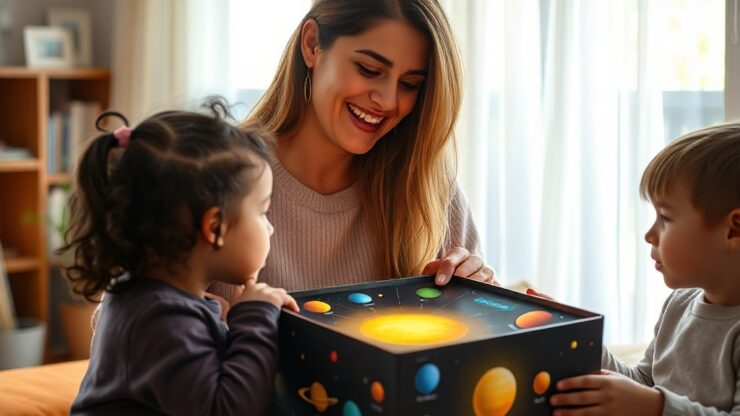
Discovering the Best STEM Toys for Kids in 2026
As a Montessori educator with over fifteen years of experience, I’ve watched the world of educational toys grow and evolve. Today, I’m thrilled to walk you through the most innovative STEM toys of 2026 that ignite curiosity, creativity, and the desire to learn in our children. These toys are more than just playthings; they’re the start of many heartfelt moments and discoveries for both children and parents.
The Evolution of STEM Toys
Understanding the progression of STEM (Science, Technology, Engineering, and Mathematics) toys is crucial in appreciating their impact. Back in the early 2010s, STEM toys were beginning to scratch the surface of their potential. Fast forward to 2026, and these toys have become sophisticated tools that integrate learning with fun in ways we never thought possible.
Just last week, I observed a group of four-year-olds constructing an intricate model of a DNA helix with a kit that included colorful, child-safe tools and connective components. The level of engagement and problem-solving I witnessed was astonishing. It was a glowing reminder of how modern toys can foster real-world skills through exploration.
Building the Foundation with Blocks and Bricks
One of my favorite go-to STEM toys remains the innovative modular block sets. These are not your typical building blocks. In 2026, they’re equipped with technological capabilities such as sensors and lights that teach basic programming and electronics concepts to kids.
Last summer, I had the pleasure of seeing my niece, Lucy, delve into her block set, creating a light-up cityscape complete with functioning bridges and moving vehicles. Her focus and pride in completing her project mirrored the triumphant accomplishments of engineers worldwide. This hands-on learning can be pivotal in nurturing spatial awareness and critical thinking in young minds.

Interactive Robotics: Friends in Learning
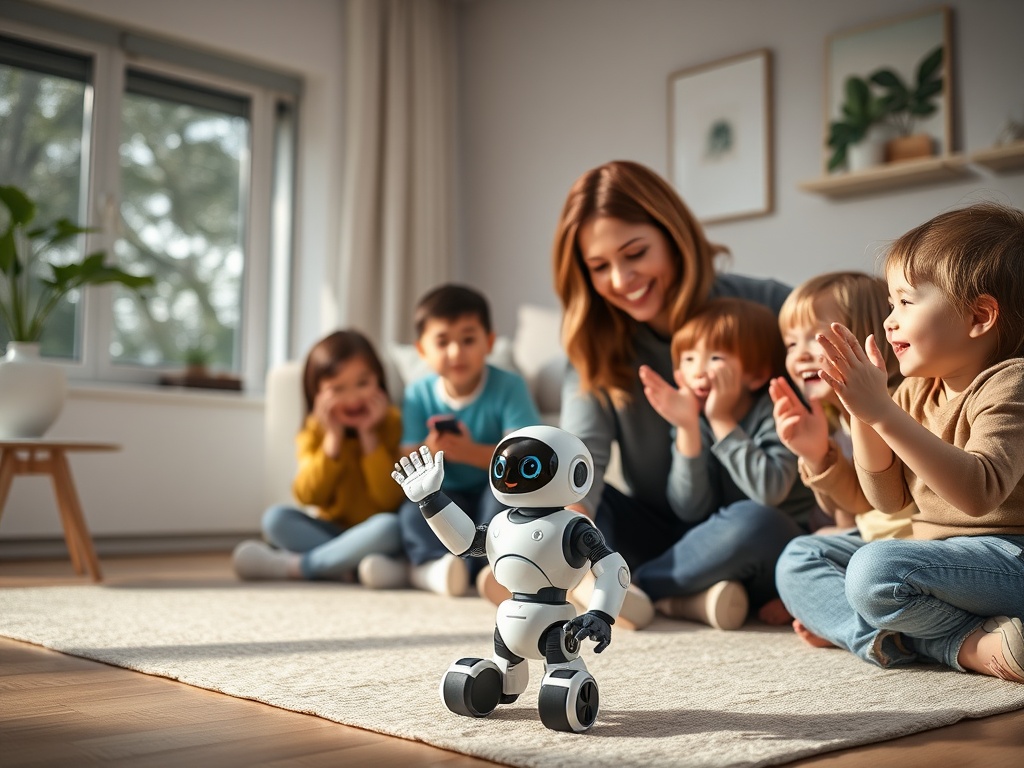
The advancements in robotics for children have been particularly riveting. Interactive robots have become the companions our kids not only play with but also code and customize. The beauty of these robots lies in their dual role as both entertainment and educational instruments.
During a parent-teacher event, I witnessed a young student, Mia, introducing her robot companion. She demonstrated how it could respond to voice commands and navigate an obstacle course she programmed. Her presentation was nothing short of a TED talk, complete with slides detailing her learning journey. Such authentic moments illustrate the empowering nature of robotics in education.
Virtual and Augmented Reality: Gateway to New Worlds
If there’s one area that’s made considerable leaps, it’s virtual and augmented reality for kids. These tools transport users to far-flung corners of the universe or deep within the human body—right from their living rooms. With VR headsets tailor-made for smaller faces and safety features that reassure parents, children can learn about complex topics through immersive experiences that traditional textbooks could never offer.
I recall an afternoon spent with my son as we traveled back in time to the age of dinosaurs. The sense of awe in experiencing such a lifelike habitat was an incredible bonding moment, sparking countless questions about biology and evolution. These technologies encourage kids to stay curious and ask questions—an essential trait in any budding scientist.
Code and Create: Mastery Through Play
Programming skills have become as fundamental as reading and writing, and coding toys have wonderfully adapted to this necessity. Today’s coding kits aren’t just about moving avatars on a screen; they teach kids the logic behind programming in tangible ways. I observed a classroom of eight-year-olds collaborating on a coding project to create a small game, filled with characters and interactive storylines they designed from scratch. The laughter and team dynamics illustrated the social and educational value of these toys.
Recently, my daughter implemented her own version of a conservation story game, where players helped clean ocean pollution. This project was more than educational; it fostered her environmental consciousness while empowering her creativity and technical skills.

The Role of Parents in STEM Education
While the right tools can set the groundwork, parental involvement is the bridge that leads to a fruitful education. I’ve seen firsthand how a parent’s encouragement can turn a moment of play into a lifelong passion. Whether it’s by setting up a science experiment at home or simply being present and curious about the things your child creates, your engagement plays an invaluable role.
Take it from this educator and mother—you don’t need to be a STEM expert to support your child. Instead, fostering an environment where questions are welcomed and exploration is encouraged will naturally guide your children towards a future of limitless potential. So, as you select the next innovative and enjoyable STEM toys for your little ones, remember that you are not just purchasing a toy; you are investing in countless smiles, newfound skills, and perhaps a future scientist, engineer, or mathematician.
From the Shopmader Community
Real voices. Real play. We value every parent’s honest journey.