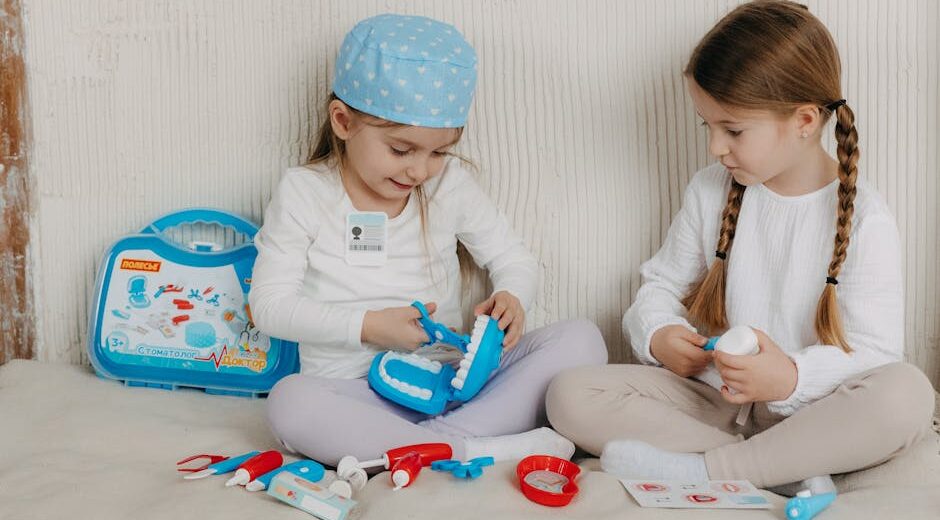
Doctor role play sets with medical tools provide invaluable learning experiences for children, promoting emotional development and imaginative play. These sets can also lessen anxieties associated with real doctor visits by familiarizing children with medical instruments and procedures.
- Enhances empathy and social skills.
- Reduces fear of medical environments.
- Fosters creative thinking and problem-solving.
Developmental Benefits of Doctor Play

Doctor role play is more than just fun; it’s a powerful tool for child development. These sets encourage children to step into the shoes of medical professionals, fostering empathy and nurturing their understanding of caring for others. As they diagnose (stuffed animals, of course!), bandage boo-boos, and offer comforting words, they are actively developing their emotional intelligence.
The act of pretending stimulates cognitive growth. Children engage in problem-solving as they decide how to treat various “ailments.” They also improve their communication skills by explaining their diagnoses and treatments to their patients (be they dolls, siblings, or even parents!). Furthermore, doctor play introduces basic scientific concepts related to the human body in a playful, accessible manner.
Specifically, playing doctor helps improve fine motor skills by manipulating smaller tools like toy stethoscopes and syringes (without needles!). It also cultivates hand-eye coordination when “giving” shots or taking temperatures. All these activities contribute significantly to a child’s overall development.
Expert Safety Tips for Doctor Play Sets

While doctor play offers numerous benefits, it’s crucial to prioritize safety. Always select sets made from non-toxic materials and ensure that all items are age-appropriate, avoiding small parts that could pose a choking hazard for younger children. Carefully inspect the set for any sharp edges or broken components before each play session.
Supervision is key, especially with younger children. Explain the purpose of each tool and emphasize that these are pretend instruments and should not be used on people in a way that could cause harm. Teach them to handle the tools gently and responsibly. Regularly clean the medical tools with disinfectant wipes to maintain hygiene.
Additionally, establish clear rules about where and how the doctor set can be used. This helps to prevent misuse of the tools and ensures that the play remains safe and enjoyable for everyone involved.
Creative Activity Ideas with Doctor Play Sets
To maximize the educational and entertainment value of a doctor playset, consider incorporating imaginative scenarios into playtime. Create a “hospital” in a designated area of your home, complete with waiting room chairs (small chairs or pillows work perfectly) and patient files (notebooks or scrap paper). Encourage children to develop storylines for their patients, inventing symptoms and treatment plans.
Expand the role-playing possibilities by introducing other characters, such as nurses, paramedics, or even veterinarians caring for stuffed animal patients. These scenarios promote empathy and broader understanding of different caregiving roles. For older children, research simple medical facts together and incorporate them into their role play to enhance learning.
Consider adding props like bandages, cotton balls, or empty medicine bottles (thoroughly cleaned, of course) to further enhance the realism of the play. Creating a visual aid like a simple anatomy chart can also spark interest in learning about the human body parts.
Real-World Experience
I’ve observed numerous times how children who engage in regular doctor play exhibit less anxiety during actual doctor’s appointments. The familiarity with the instruments and procedures, even in a pretend setting, helps them to feel more in control and less fearful. One parent shared that their child, who previously dreaded vaccinations, was surprisingly calm after weeks of “giving shots” to their teddy bears. This demonstrates the positive impact these play sets can have on children’s emotional wellbeing.
Frequently Asked Questions
Q: At what age is a doctor play set appropriate?
A: Most doctor play sets are designed for children ages 3 and up, due to small parts. Always check the manufacturer’s recommendations and consider your child’s individual developmental level.
Q: How can I encourage my child to engage in doctor play?
A: Start by introducing the set and demonstrating how to use the tools. Ask open-ended questions like, “What seems to be wrong with your patient?” or “How can you help them feel better?” Join in the play yourself to model caring and empathetic behavior.
Q: Are there any alternatives to plastic doctor play sets?
A: Yes, many sustainable and eco-friendly options are available, including wooden or fabric doctor play sets. Look for sets made from recycled materials or sustainably sourced wood.