Key Takeaways
Logic circuit building kits offer a highly engaging and effective approach to introducing STEM concepts to children, fostering critical thinking and problem-solving skills in a playful manner. These kits provide hands-on experience that solidifies understanding and encourages a lifelong love of learning.
- Enhance problem-solving and critical-thinking abilities.
- Introduce fundamental concepts of electronics and computer science.
- Provide a fun and interactive learning experience for children of all learning styles.
Developmental Benefits
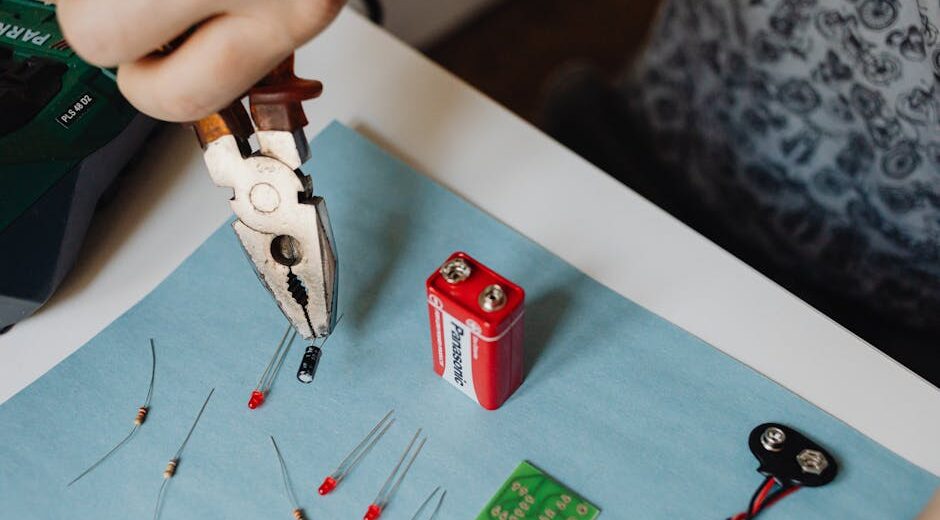
Logic circuit building kits are more than just toys; they are powerful developmental tools. By manipulating components such as transistors, resistors, and LEDs, children gain a tangible understanding of how electrical circuits function. This hands-on interaction promotes spatial reasoning as they arrange components and wires to create working circuits.
Furthermore, these kits foster critical thinking and problem-solving skills. Children are challenged to diagnose issues when a circuit doesn’t function as intended, encouraging them to systematically analyze each connection and identify the source of the problem. This iterative process of experimentation and refinement cultivates persistence and resilience, valuable traits in any field.
Beyond the technical skills, logic circuit building encourages creativity and innovation. Children can design and build their own circuits, pushing the boundaries of what’s possible and exploring unique combinations of components. This creative exploration lays the foundation for future innovation and fosters a spirit of curiosity.
Expert Safety Tips
Safety is paramount when introducing children to electronics. Always supervise children while they are working with logic circuit building kits, especially younger children who may be tempted to disassemble components or put them in their mouths. Choose kits specifically designed for children, with robust construction and clear instructions. Check for certifications showing that they meet safety standards, such as those set by ASTM and CPSIA.
Teach children about the importance of respecting electrical components and following instructions carefully. Emphasize that circuits should always be disconnected from power sources when making changes or adjustments. Instruct children on proper handling of batteries to prevent leakage or overheating. Proper battery handling also ensures the longevity of the kit components.
Regularly inspect the kit components for any signs of damage, such as frayed wires or cracked casings. Dispose of any damaged components properly. Store the kit in a safe and organized manner, away from moisture and extreme temperatures, to prevent damage and prolong its lifespan.
Activity Ideas
Start with simple projects included in the instruction manual to familiarize children with the basic components and circuit diagrams. As their understanding grows, encourage them to modify existing circuits or design their own from scratch. Challenges like building a simple alarm system or a light-sensitive switch can be particularly engaging.
Incorporate logic gates, such as AND, OR, and NOT gates, into the circuits to introduce the fundamentals of digital electronics. Explore the use of timers and sensors to create more complex and interactive projects. Consider using online resources, such as videos and tutorials, to supplement the learning experience and inspire new ideas. Working through projects with a friend or sibling can further enhance the learning process and foster collaboration.
Consider group projects that requires collaborative work and divide responsibilities, and encourage peer review to ensure effective communication and proper alignment of their individual designs. This increases interest and teaches cooperative skills alongside the electrical content.
Real-World Experience
My own nephew, initially showing little interest in STEM subjects, became completely engrossed in a logic circuit building kit gifted to him on his tenth birthday. Within a few weeks, he was not only building the projects outlined in the manual but also experimenting with his own designs. What began as a casual pastime evolved into a passionate interest in electronics, eventually influencing his high school course selections and even his college major. The kit not only provided him with valuable technical skills but also ignited a spark of curiosity that has shaped his academic and career trajectory.
Frequently Asked Questions
Q: What age range is appropriate for logic circuit building kits?
A: Most kits are designed for children ages 8 and up, though some simpler kits are available for younger children with adult supervision. Always check the manufacturer’s recommendations.
Q: Are these kits safe for children to use?
A: Yes, when used properly and under adult supervision. Choose kits from reputable manufacturers that meet safety standards and carefully follow the instructions.
Q: What are the benefits of logic circuit building kits?
A: They promote critical thinking, problem-solving, spatial reasoning, and creativity, while also introducing fundamental concepts of electronics and computer science.