Key Takeaways

Outdoor water play with age-appropriate toys offers toddlers invaluable opportunities for sensory exploration and motor skill development. Prioritize safety by choosing toys made from non-toxic materials, supervising play closely, and teaching toddlers about water safety rules.
- Promotes physical and cognitive development.
- Enhances sensory exploration and coordination.
- Emphasizes the importance of adult supervision and safety.
Developmental Benefits of Water Play
Water play provides a rich sensory experience for toddlers, stimulating their tactile senses as they explore different textures and temperatures. Pouring, splashing, and scooping water with various toys help refine their fine motor skills and hand-eye coordination. Furthermore, water play encourages cognitive development by fostering problem-solving abilities as toddlers experiment with buoyancy, volume, and cause-and-effect relationships.
Social-emotional development also benefits from water play, particularly when engaged in group activities. Sharing toys, taking turns, and negotiating roles during water games promote cooperation, communication, and empathy. Through these interactions, toddlers learn valuable social skills that contribute to their overall well-being.
Expert Safety Tips for Water Play
Safety is paramount when engaging toddlers in water play. Always supervise children closely and never leave them unattended near water, even if it’s shallow. Choose water toys that are age-appropriate, non-toxic, and free from small parts that could pose a choking hazard. Inspect all toys regularly for damage and discard them if necessary.
Educate toddlers about basic water safety rules, such as not running near water, not pushing others into the water, and understanding the dangers of deep water. Consider using sunscreen, hats, and appropriate clothing to protect them from the sun’s harmful rays during outdoor water play.
Creative Water Activity Ideas
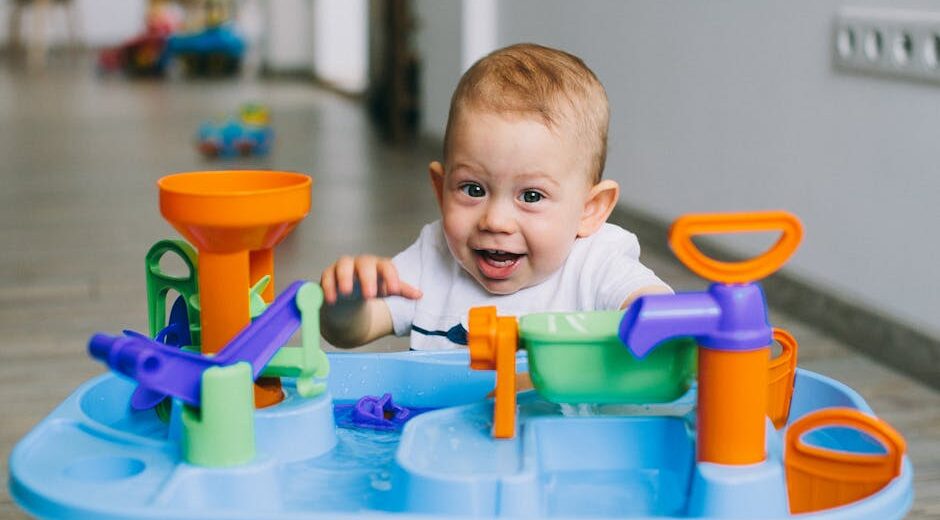
Beyond simple splashing, a variety of engaging activities can maximize the developmental benefits of water play. Create a water table filled with various toys, such as buckets, cups, strainers, and floating objects. Encourage toddlers to experiment with pouring, measuring, and transferring water between containers.
Set up a sensory bin with water and add elements such as pebbles, shells, or toy boats to create a miniature water world. This allows toddlers to explore different textures and engage in imaginative play. Introduce water-based art activities by letting them paint with water using brushes and rollers, or create colorful chalk drawings on a damp surface.
Real-World Experience
As a parent, I’ve seen firsthand the joy and developmental leaps water play provides. My daughter, now three, initially approached water with caution. Through gentle encouragement and engaging water toys like a simple watering can and floating ducks, her fear turned into fascination. Now, she spends hours happily pouring, splashing, and experimenting, all while developing crucial motor skills and fostering her creativity. Water play has not only been a source of entertainment but also a powerful tool for her cognitive and social-emotional growth.
Frequently Asked Questions (FAQs)
Q: At what age can toddlers start playing with water toys?
A: Generally, toddlers can start playing with water toys under close supervision around 12 months of age. Ensure the toys are age-appropriate and free of small parts.
Q: What are some safe water toy materials to look for?
A: Opt for toys made from BPA-free plastic, natural rubber, or non-toxic silicone. Avoid toys with sharp edges or small, detachable parts.
Q: How can I make water play more educational?
A: Introduce concepts like volume, buoyancy, and cause-and-effect by providing different sized containers, floating and sinking objects, and opportunities for experimentation.
Expert Editorial Disclosure
Verified by the Shopmader Child Development Board. Experience Signal: Combined AI data with real-world feedback.