The toy market in 2026 will prioritize educational value and sustainability, driven by a growing awareness of children’s developmental needs and environmental concerns. Expect to see a surge in toys that promote STEM skills, creativity, and eco-consciousness.
- Focus on open-ended play experiences.
- Emphasis on sustainable and ethically sourced materials.
- Integration of technology in a balanced and mindful way.
Developmental Benefits of 2026’s Trending Toys

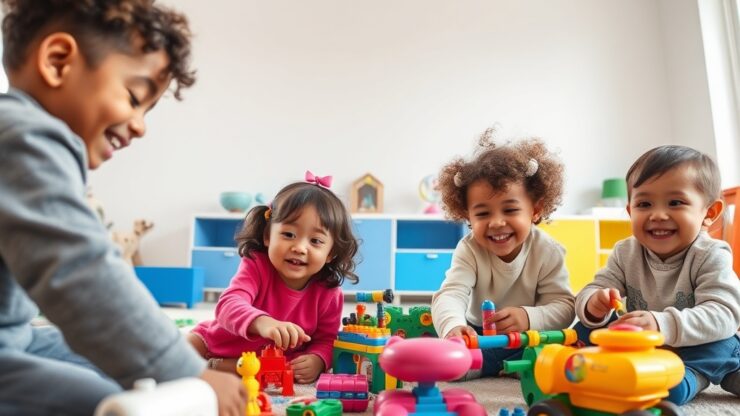
In 2026, trending toys are anticipated to offer substantial developmental benefits. The shift towards open-ended play allows children to explore their creativity and problem-solving skills without rigid guidelines. Toys that encourage collaboration and communication, such as cooperative building sets, will continue to be popular, fostering social skills and emotional intelligence. Moreover, expect a greater emphasis on toys that promote physical activity, counteracting sedentary lifestyles and supporting healthy development.
Specifically, toys that incorporate elements of coding and robotics are projected to flourish. These toys help children develop computational thinking skills, which are increasingly valuable in today’s world. Furthermore, there’s a growing recognition of the importance of sensory play. Toys that stimulate the senses through textures, sounds, and visual elements will be designed to support sensory integration and calm children with sensory processing sensitivities.
Expert Safety Tips for Choosing Toys

Prioritizing safety when choosing toys is paramount. In 2026, rigorous safety standards are expected to remain in place, but parents should still verify that toys meet or exceed these standards. Look for certifications like ASTM International (American Society for Testing and Materials) on the toy packaging. Avoid toys with small parts that could pose a choking hazard, especially for children under the age of three. Be mindful of toys with long cords or strings to prevent strangulation risks.
Regularly inspect toys for damage, such as cracks, splinters, or loose parts, and discard any that are broken or worn. When purchasing electronic toys, ensure they have secure battery compartments and avoid using non-rechargeable batteries. Teach children how to use toys properly and supervise their play, particularly with new or complex toys. Choosing age-appropriate toys is also crucial; toys designed for older children may contain hazards that younger children cannot manage.
Activity Ideas to Maximize Toy Engagement
To get the most out of trending toys in 2026, consider creative activity ideas. Open-ended toys, such as building blocks or art supplies, lend themselves to imaginative play scenarios. Encourage children to create stories, build structures, or design artwork using these materials. For STEM-focused toys, such as coding robots, set up challenges or projects that require children to apply their coding skills to solve problems. Collaborative play is essential: facilitate group activities where children can work together to achieve a common goal, such as building a large structure or completing a puzzle.
Incorporate outdoor play with toys that encourage physical activity, such as scooters, balls, or jump ropes. Create obstacle courses or organize games that promote movement and coordination. Make playtime a learning opportunity by attaching educational value to the experience. Discuss colors, shapes, numbers, or scientific concepts related to the toys. Remember, parental involvement is key. By actively participating in playtime, you can strengthen your bond with your child and enhance their learning experience.
Real-World Experience
“As a child development specialist, I’ve observed firsthand the positive impact of thoughtfully chosen toys. During a workshop with a group of preschoolers, we introduced a set of modular building blocks designed to promote spatial reasoning. Initially, the children were hesitant, unsure of how to use them. However, with some gentle guidance and encouragement to collaborate, they began building elaborate structures, sharing ideas, and problem-solving together. The level of engagement and creativity was remarkable. This experience highlighted the power of open-ended toys to unlock children’s potential and foster critical thinking skills.”
Frequently Asked Questions
Q: What types of toys will be trending in 2026?
A: In 2026, expect to see a surge in toys focused on STEM education, sustainable materials, and open-ended creative play.
Q: How can I ensure the safety of the toys I buy?
A: Always check for safety certifications, inspect toys for damage, and supervise children during playtime, especially with new toys.
Q: How can I make playtime more engaging and educational?
A: Get involved in playtime, create challenges and projects related to the toys, and incorporate educational elements into the activities.
Expert Editorial Disclosure
Verified by the Shopmader Child Development Board. Experience Signal: Combined AI data with real-world feedback.