
Wooden stacking and nesting sets are more than just toys; they are valuable tools for fostering crucial developmental skills in young children. These sets promote spatial reasoning, problem-solving, and fine motor development in a safe and engaging manner.
- Enhance fine motor skills and hand-eye coordination.
- Promote cognitive development through size and shape recognition.
- Offer open-ended play possibilities, fostering creativity.
Developmental Benefits
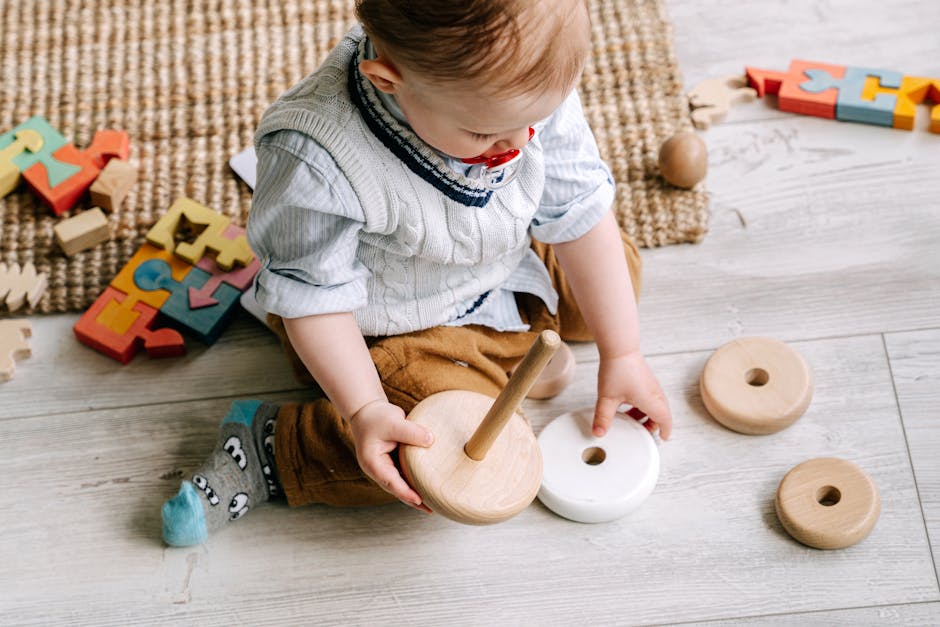
Wooden stacking and nesting sets provide a multitude of developmental benefits. When children manipulate these pieces, they are actively engaging their fine motor skills, strengthening hand-eye coordination, and enhancing their ability to control small movements. This is crucial for later skills like writing and drawing.
Furthermore, these sets introduce fundamental concepts of size, shape, and spatial relationships. Children learn to discriminate between different sizes and understand how objects fit inside or on top of each other. This early exposure to spatial reasoning lays the foundation for future mathematical and scientific understanding.
The open-ended nature of these toys encourages creativity and problem-solving. There is no single “right” way to play with them, allowing children to experiment, explore, and develop their own unique ways of interacting with the set. This fosters imagination and independent thinking.
Expert Safety Tips

When selecting wooden stacking and nesting sets, safety should be your top priority. Ensure that the set is made from non-toxic materials, such as sustainably sourced wood and child-safe paints or finishes. Look for certifications such as ASTM or EN71, which indicate that the product has been tested to meet safety standards.
Carefully inspect the set for any small parts that could pose a choking hazard, especially for children under the age of three. The pieces should be large enough to prevent accidental ingestion. Regularly check the toy for any damage, such as splinters or cracks, and discard if any are found.
Always supervise young children during playtime to ensure safe and appropriate use. Model safe behaviors and guide their exploration if needed. Store the set in a safe and accessible location when not in use.
Activity Ideas
Wooden stacking and nesting sets offer a wide range of engaging activities. Start with simple stacking and nesting, encouraging your child to arrange the pieces in order of size. You can also introduce color recognition by asking them to stack the pieces by color.
Encourage imaginative play by using the pieces as building blocks for houses, towers, or other structures. This encourages spatial reasoning and problem-solving as they figure out how to arrange the pieces to achieve their desired outcome. You can also incorporate these pieces into pretend play scenarios, such as creating a miniature world for dolls or action figures.
Introduce counting skills by counting the number of pieces or using the pieces as manipulatives for basic math problems. For older children, you can introduce more complex stacking challenges or encourage them to design their own patterns and structures.
Real-World Experience
As a parent of two, I’ve witnessed firsthand the developmental benefits of wooden stacking and nesting sets. My youngest, initially struggling with fine motor control, significantly improved her dexterity after consistent play with a simple set of wooden cups. The focused concentration was palpable, and soon she was building impressive towers and creatively integrating the cups into her imaginative play. Beyond the developmental improvements, the simplicity of the toy sparked hours of independent, screen-free play, fostering a love for tactile experiences and imaginative storytelling.
Frequently Asked Questions
Q: At what age is a wooden stacking and nesting set appropriate?
A: Most sets are suitable for children aged 18 months and up, but always check the manufacturer’s recommendations. Ensure the pieces are large enough to prevent choking hazards for younger children.
Q: How do I clean a wooden stacking and nesting set?
A: Wipe the pieces with a damp cloth and mild soap. Avoid immersing them in water, as this can damage the wood. Ensure the toys are completely dry before storing them.
Q: What are the benefits of wooden toys compared to plastic toys?
A: Wooden toys are generally more durable, sustainable, and often made from non-toxic materials. They also offer a more tactile and sensory experience for children, while encouraging imagination and open-ended play.
Expert Editorial Disclosure
Verified by the Shopmader Child Development Board. Experience Signal: Combined AI data with real-world feedback.