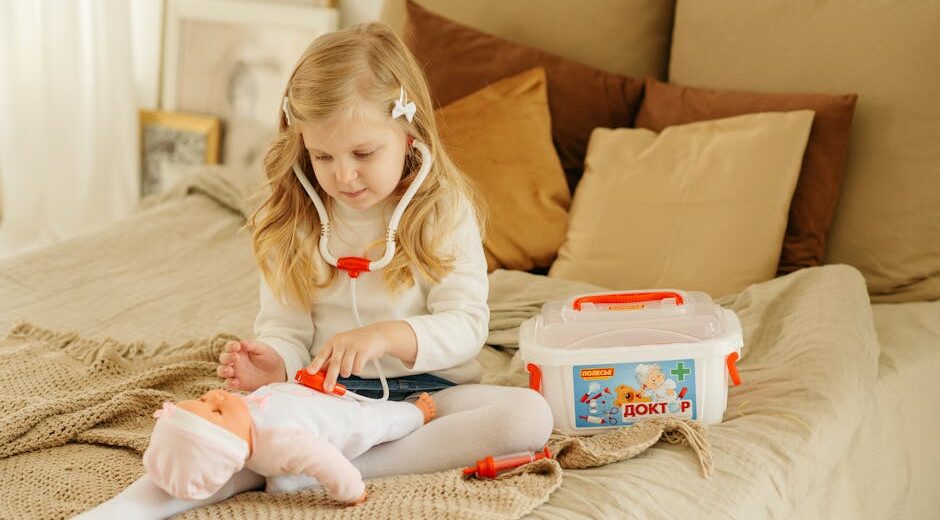
Pretend play kitchens and doctor kits are invaluable tools for child development, fostering creativity, problem-solving skills, and social-emotional growth.
- Encourage imaginative scenarios that mirror real-life situations.
- Promote language development through role-playing and storytelling.
- Help children develop empathy and understanding of different roles.
Developmental Benefits of Pretend Play
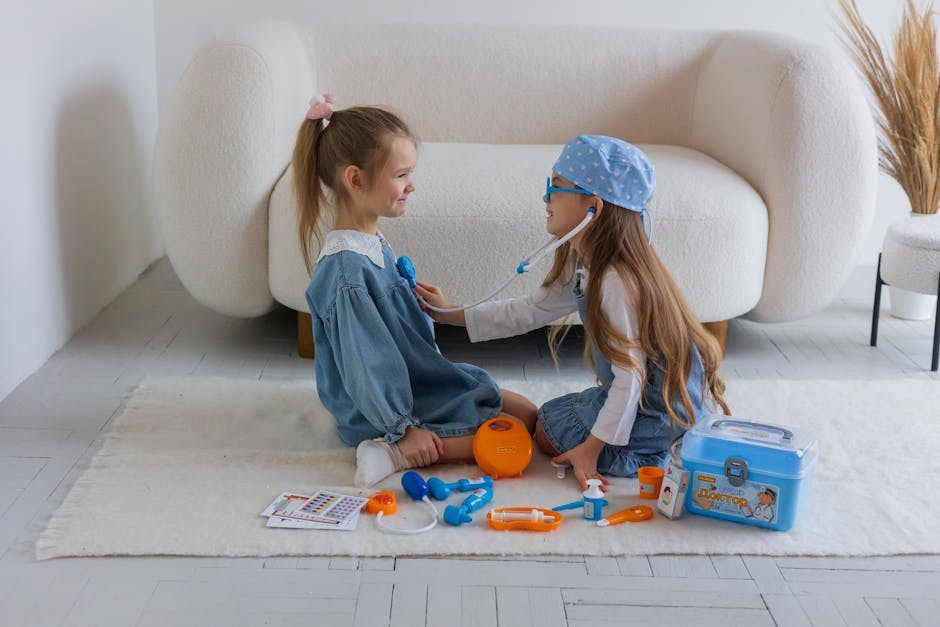
Pretend play, particularly with items like play kitchens and doctor kits, offers a wealth of developmental advantages for children. These seemingly simple toys provide opportunities to explore complex social roles, practice communication skills, and develop cognitive abilities.
Specifically, a play kitchen allows children to mimic cooking and food preparation activities, strengthening their understanding of cause and effect and boosting early math skills as they measure and ‘cook’. Doctor kits, on the other hand, allow children to explore taking care of others, developing empathy and understanding healthcare procedures. This can be especially helpful in alleviating anxiety surrounding doctor visits.
Furthermore, pretend play encourages the development of problem-solving skills. Children encounter simulated challenges and are encouraged to devise creative solutions, therefore fostering flexible thinking and innovation.
Expert Safety Tips
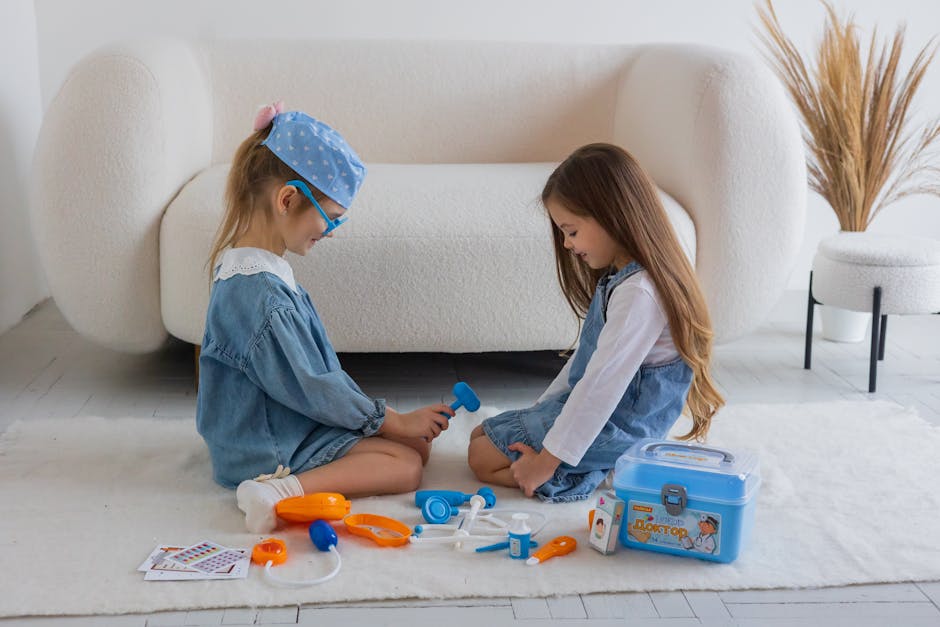
While engaging in pretend play, prioritizing children’s safety is paramount. Regularly inspect play kitchens and doctor kits for any loose parts, sharp edges, or potential choking hazards. Ensure that all materials are non-toxic and lead-free.
Supervise younger children during playtime to prevent any accidents or misuse of the toys. Teach children about the appropriate use of each item in the kit and discourage rough play. Emphasize the difference between pretend play and real-world situations, especially when it comes to medical scenarios. For example, demonstrate that while the toy stethoscope is fun, it is not a valid medical instrument.
Proper storage of the play equipment is also essential. Store all items when not in use to prevent tripping hazards and keep them clean and organized.
Activity Ideas to Enhance Pretend Play
To maximize the benefits of pretend play kitchens and doctor kits, introduce a variety of engaging activities. Invite your child to plan and prepare a pretend meal for the family using the play kitchen. Create menus together, shop for ingredients (real or pretend), and practice setting the table. You can also introduce themes, such as a restaurant night or a picnic.
With the doctor kit, encourage your child to conduct check-ups on family members, stuffed animals, or dolls. Use the opportunity to teach them about different body parts and their functions. Role-playing as a patient can also help them develop empathy and understanding of medical care.
Integrating books, stories, and real-life experiences can further enrich the play experience. For instance, reading a story about a chef or a doctor can inspire new ideas and scenarios for pretend play.
Real-World Experience
I’ve personally witnessed the positive impact of pretend play kitchens and doctor kits on children’s development. My niece, initially apprehensive about doctor visits, greatly benefited from playing with a doctor kit. By familiarizing herself with the instruments and procedures in a safe and playful environment, she became more comfortable and less anxious during actual check-ups. Her newly found confidence and understanding were truly remarkable.
Frequently Asked Questions
Q: At what age is it appropriate to introduce a pretend play kitchen or doctor kit?A: Most children are ready for these types of toys around the age of 3, when they begin to engage in more complex imaginative play.
Q: Are there any specific safety features to look for when purchasing these toys?A: Yes, ensure the toys are made from non-toxic materials, have smooth edges, and are free of small parts that could pose a choking hazard.
Q: How can I encourage my child to engage in pretend play if they seem uninterested?A: Start by participating in the play yourself. Model imaginative scenarios, ask open-ended questions, and provide props to spark their interest.